What is Demand Engineering? The Revenue System Built for Technical Consulting Firms
What is Demand Engineering?
Demand Engineering is the discipline of building the revenue infrastructure that makes technical expertise visible, credible, and commercially accessible to the right buyers at the right moment.
It is the systematic process of moving a buyer from unknown, to qualified, to owned — without relying on high-volume outbound, paid advertising, or passive referral dependency.
For B2B technical consulting firms, demand engineering replaces the unpredictable nature of reputation-based growth with a compounding system. It treats revenue generation not as a creative marketing exercise, but as an architectural problem to be solved: who exactly is the buyer, what triggers them to act, what evidence do they need to trust you, and what infrastructure needs to be in place to intercept them at that moment.

The term is distinct from “demand generation” — a volume-based discipline built for SaaS and high-volume B2B products — and from “on-demand engineering” — a staffing model for technical resource allocation. Demand engineering as a GTM discipline is specifically designed for firms that sell deep, bespoke engagements in technical domains to a small, sophisticated buyer population.
The Referral Ceiling: Why Technical Firms Stall
Most technical consulting firms are built on a foundation of deep expertise. The founders are brilliant practitioners. The early clients are thrilled. The work speaks for itself.
And for a while, that works. Growth happens organically through referrals and reputation.
But eventually, every firm hits the same wall. The network gets tapped. A key relationship moves on. The market shifts, and suddenly the firm is still the best solution — just not the obvious one. Revenue does not compound. It resets every time a referral does not come through.
According to industry data, up to 31% of consultants obtain 60–80% of their business through referrals. This dependency creates a structural vulnerability: when the referrals slow, the firm is starting from zero with no system to replace them.
This is the referral ceiling. Breaking through it does not require more marketing activity. It requires a different architecture — one built for the way technical buyers actually make decisions.
If you want to understand whether your firm has hit this ceiling, read How to Get Consulting Clients Without Relying on Referrals.
Demand Engineering vs. Demand Generation
When technical founders realise they need to grow beyond referrals, they often turn to demand generation or hire a traditional B2B marketing agency. This usually fails — not because of poor execution, but because demand generation and demand engineering are built for fundamentally different business models. For a full breakdown, see Demand Engineering vs. Demand Generation: What Technical Consulting Firms Actually Need.
| Demand Generation | Demand Engineering | |
|---|---|---|
| Core philosophy | Volume and broadcast | Precision and architecture |
| Target audience | Broad market segments | Highly specific, high-intent buyers |
| Primary metric | MQLs, traffic, impressions | Qualified conversations booked |
| Sales cycle | Short, repeatable, self-service | Long, trust-dependent, bespoke |
| Market size | Large TAM (10,000+ prospects) | Small TAM (200–500 genuine prospects) |
| Best fit | SaaS, high-volume products | High-ticket technical consulting |
Demand generation broadcasts to the 95% of the market that is not ready to buy. Demand engineering identifies the 5% who are, and builds the infrastructure to intercept them when they are evaluating solutions — before they have made up their minds, but after they have identified the problem.
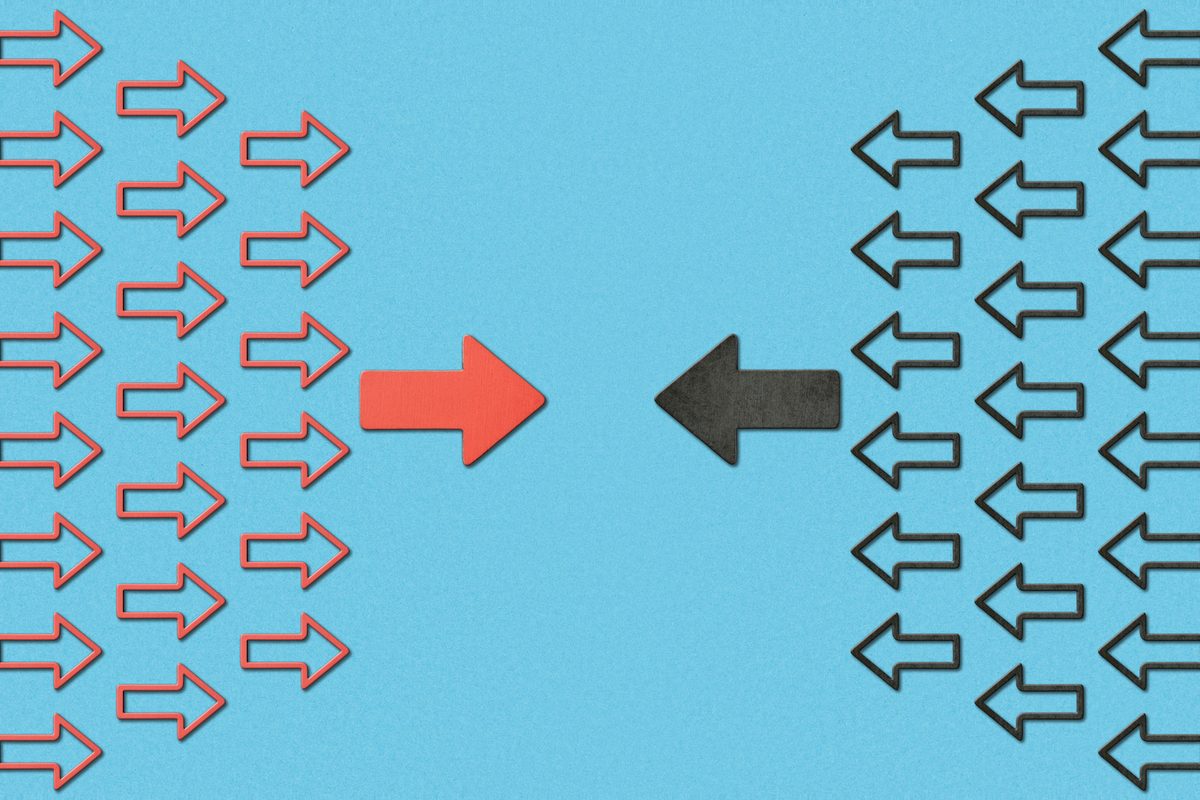
The distinction matters because applying a volume-based model to a precision-based market does not produce fewer results. It produces the wrong results: discovery calls with buyers who cannot evaluate your work, pipeline full of noise that consumes time and produces no revenue, and a reputation signal to sophisticated buyers that you do not understand your own market.
What Demand Engineering Is Not
Because the term is relatively new, it is worth being precise about what demand engineering is not — and what it should not be confused with.
It is not demand generation. Demand generation is a volume play. Demand engineering is a precision play. They share some channels (content, email, LinkedIn) but differ entirely in philosophy, metrics, and architecture.
It is not a fractional CMO engagement. A fractional CMO provides strategic advice and typically manages existing marketing resources. Demand engineering builds the infrastructure from the ground up — the positioning, the content, the outbound system, the conversion layer, the measurement framework. It is an execution discipline, not an advisory one.
It is not traditional agency retainer work. A traditional agency sells services — content production, ad management, social media management — and reports on activity metrics. Demand engineering is accountable to pipeline outcomes: qualified conversations booked, pipeline velocity, and revenue attributed to system activity. If the system is not producing qualified conversations, the architecture is the problem to fix.
It is not DIY content marketing. Publishing blog posts and hoping the right buyer finds them is not a demand engineering system. Demand engineering uses content as one component of a larger architecture — specifically, credibility-first content built around trigger events that reaches the right buyer at the moment of active search, not general-audience content designed for reach.
It is not suitable for every business model. Demand engineering is designed for principal-led B2B technical consulting firms with high-value, trust-dependent engagements and small total addressable markets. It is not the right model for SaaS companies, freelancers, or firms selling commoditised services to large, undifferentiated markets.
Who Demand Engineering Is Built For
Demand engineering is specifically designed for a narrow category of firm. The profile is consistent across engagements:
The firm type: Principal-led B2B technical consulting firms — where the founder or a small group of senior practitioners is the primary delivery mechanism. The firm’s competitive advantage is domain depth, not scale.
The technical domain: Cybersecurity consulting firms, AI/ML and data engineering consultancies, Embedded systems firms, regulatory compliance and GRC consultancies and government technology firms, and adjacent technical verticals where buyers evaluate vendors through evidence of competence rather than marketing claims. See how this plays out in practice in the Cybersecurity Consulting Marketing GTM Playbook.
The growth stage: Firms that have achieved initial market validation through referrals and reputation — typically $500K to $5M in annual revenue — but have hit the ceiling of what passive referral-based growth can produce. The expertise is proven. The system to turn it into consistent pipeline has not been built.
The trigger event: Something has changed. A key client relationship ended. A competitor with weaker technical credentials won a bid with better positioning. A new service line needs a go-to-market. Or simply: the principal has realised that chasing leads personally every week is not a business model, and wants to build something that runs.
If your firm fits this profile, demand engineering is not one option among many. It is the specific architecture that matches your buyer, your market, and your sales cycle.
The FABRIC Methodology
At Influential B2B, demand engineering is executed through a proprietary six-phase methodology called FABRIC. Each phase builds on the last — which is why sequence matters, and why firms that skip Foundation and start with channel activation consistently fail to produce consistent pipeline.
1. Foundation
Before building anything, we lock the positioning. This means defining the exact ICP — not a broad category like “enterprise companies” but the specific role, company stage, technical domain, and situation that makes a buyer a fit right now. We identify the trigger events that cause them to act: a new regulation, a failed internal project, a strategic pivot, a new hire. We map what competitive alternatives exist and what none of them can provide that this firm can.
The output of Foundation is a positioning document that answers three questions with one sentence each: who is the buyer, what do they have that no alternative can reliably provide, and what is the evidence. Without this, every downstream channel produces unqualified noise.
2. Architecture
With positioning locked, we design the specific systems required to capture demand. This means selecting the two or three channels that match the firm’s market, audience, and delivery capacity — not running all channels at partial effort. We design the conversion infrastructure: how a prospect moves from first contact to qualified conversation, what filters them in or out before they consume delivery bandwidth, and what nurture infrastructure stays in contact with buyers who are not ready now but will be in six months.
3. Build
The architecture becomes tangible. Website copy is rewritten around the ICP and trigger events. CRM workflows are configured to track where every prospect is in the buying cycle. Core content assets are built: the credibility-first pieces that reach buyers at moments of active search. Outbound sequences are written — not templates, but messages built around specific observations about specific prospects’ situations.
4. Release
The system goes live. Outbound campaigns launch. Content publishes. Referral activation begins — the deliberate process of giving the firm’s top ten to fifteen referral sources the language and triggers to make introductions deliberately rather than passively. Baseline metrics are established: qualified conversations booked per month, response rates by channel, conversion from conversation to proposal.
5. Improve
Real-world data replaces assumptions. We measure actual market response against the baseline: which messages convert, which content drives inbound, which referral sources are producing introductions. We run messaging variants, tighten targeting based on who is actually converting, and fix the conversion points that are losing qualified prospects before a call is booked.
6. Compound
Once the system is proven and producing qualified conversations consistently, we scale the components that are working. Adjacent content clusters are built to expand inbound coverage. Outbound volume increases as the firm’s pipeline absorbs more capacity. Secondary referral relationships are activated. The system compounds — each piece of content, each relationship, each documented case study adding to a revenue infrastructure that runs whether or not the principal is personally chasing leads that week.

What the System Looks Like in Practice
A demand engineering engagement typically produces a measurable sequence of changes over a 90 to 180 day period.
Weeks 1–4 (Foundation + early Architecture): Positioning is locked. The firm can now describe its ICP and trigger events in a single sentence. Referral activation begins — two to three qualified introductions often arrive in the first thirty days from existing relationships that had never been deliberately activated. This is consistently the fastest path to a new client conversation for any firm with an existing network.
Weeks 5–12 (Build + Release): Core content publishes. Outbound launches at precision volume — twenty to thirty contacts per week, not five hundred. First inbound enquiries begin to arrive from content. The CRM starts capturing where every prospect is rather than relying on memory. Discovery calls become more consistent because the intake process filters unqualified buyers before they book.
Months 4–6 (Improve + early Compound): Content begins to compound — early pieces are indexed, driving inbound at a rate that grows without additional effort. Outbound response rates improve as messaging is refined against real market feedback. The pipeline is no longer solely dependent on referrals or personal outreach. The system is running.
The specific outcomes vary by firm — the Xlera Solutions case study documents a GTM rebuild for an FPGA consultancy; the AuthenTech AI case study documents a productised acquisition funnel for an AI consultancy — but the structural shift is consistent: from reactive, referral-dependent pipeline to a compounding system with predictable inputs and measurable outputs.
The Outcomes of Demand Engineering
When a technical consulting firm implements a demand engineering system, the results are structural and measurable — not campaign-level metrics that look good in a report but disconnect from revenue.
Positioning clarity. The language shifts from tactical to strategic. “We do FPGA projects” becomes “We commercialise FPGA products for telecoms OEMs within procurement timelines.” That shift changes who responds to every message, not just the marketing ones.
Qualified pipeline. The metric that matters is not MQL count, sessions, or impressions. It is qualified conversations per month — discovery calls with buyers who match the ICP, have the authority and budget to engage, and are evaluating right now. Two to four per month is a functioning demand engineering system for most principal-led firms.
Attribution. For the first time, the firm can trace a signed engagement back to a specific content piece, outbound message, or referral activation. That attribution changes how the principal allocates time: toward the inputs that produce revenue, away from the activity that produces noise.
Referral infrastructure. Referrals do not stop — they become deliberate. The existing network, which was producing passive introductions, is now producing timed, specific introductions from sources who know exactly who to refer and when.
Conclusion
Your competitors are not winning because they are better. They are winning because they got in front of the right buyer, with the right language, at the right moment. You had the solution. They had the system.
The firms that win the next cycle are not the loudest. They are the ones that built the infrastructure to be seen by the right buyers at the right moment — and built it before the referral ceiling became a revenue crisis.
Demand engineering is that infrastructure.
If you want to understand how AI is accelerating the urgency for this shift, read AI Is Commoditising Technical Expertise. If you are planning to enter a new market, read Entering a New Market as a Technical Consulting Firm. For the tools used to execute this system, see the Demand Engineering Stack. To understand why most agencies fail to solve this problem, read Why Generalist Agencies Fail Technical Consulting Firms.
Ready to find out if your market window is still open? Book a 30-minute strategy call and we will audit your current revenue system against your market in real time.

Frequently Asked Questions
What is demand engineering? Demand Engineering is the discipline of building the revenue infrastructure that makes technical expertise visible, credible, and commercially accessible to the right buyers at the right moment. It treats revenue generation as an architectural problem — not a creative or volume-based marketing exercise — and is specifically designed for B2B technical consulting firms.
What is the difference between demand engineering and demand generation? Demand generation broadcasts to the 95% of the market that is not ready to buy, optimising for MQL count, traffic, and reach. Demand engineering identifies the 5% who are ready and builds the infrastructure to intercept them at the moment of evaluation. Demand generation was built for SaaS. Demand engineering was built for technical consulting firms with small TAMs and trust-dependent sales cycles.
What is the difference between demand engineering and a fractional CMO? A fractional CMO provides strategic guidance and manages existing marketing resources. Demand engineering builds the actual revenue infrastructure — positioning, content, outbound, conversion — from the ground up. A fractional CMO advises. A demand engineering engagement builds.
Who is demand engineering for? It is specifically designed for principal-led B2B technical consulting firms — cybersecurity, AI/ML, embedded systems, and adjacent technical verticals — that win on expertise but rely heavily on referrals for new business.
How long does it take to see results from demand engineering? Initial results — referral activation, warm outbound replies, early inbound — typically appear within 30 to 60 days. A fully compounding system reaches steady state in 90 to 180 days. The key variable is whether positioning is clear before any channel is activated.
What does a demand engineering system include? A demand engineering system includes: precise ICP definition and positioning, trigger-event-based content, a referral activation framework, precision outbound (LinkedIn and cold email), conversion infrastructure (intake forms, CRM, nurture sequences), and measurement on qualified conversations rather than MQL count.
References
[1] Software Oasis. “Best Global Consulting Referral Practices Data & Statistics.” https://softwareoasis.com/global-consulting-referral-practices-data/
[2] Seeda. “Demand generation vs. demand creation: What you should know.” https://www.seeda.io/blog/demand-generation-vs-demand-creation-what-you-should-know
[3] Sachin Jha. “The Shift to Demand Engineering.” LinkedIn. https://www.linkedin.com/posts/jha-sachin_demand-generation-has-one-fundamental-flaw-activity-7437006442240315392-Laaq
Ready to build the system?
Your expertise is the product.
Your go-to-market is the multiplier.
If this resonated, let's talk about what a demand engineering system looks like for your firm.
Get in touch →