The Demand Engineering Stack: Tools We Use to Build Revenue Systems for Technical Consulting Firms
Most B2B marketing tech stacks were designed for SaaS companies: high-volume email sequences, MQL scoring models, paid advertising dashboards, and CRM pipelines built to handle thousands of leads. They were not built for a principal-led technical consulting firm with 300 genuine prospects and a nine-month sales cycle.
Applying a SaaS-optimised stack to a precision-based consulting firm is like using a firehose to water a single plant. The volume overwhelms the relationship. The automation signals that you don’t understand your buyer. The reporting shows activity instead of pipeline.
This is the exact stack we use at Influential B2B to build demand engineering systems for technical consulting firms — and more importantly, why each tool was chosen for this specific context rather than a generic B2B environment.

Research and Intelligence
Before building any outreach sequence, content calendar, or channel strategy, we need to understand the market reality precisely. Not what we assume buyers are searching for — what they are actually searching for, who they trust, and where they spend attention.
Our baseline for search visibility and competitive intelligence. For technical consulting firms, SEMrush answers the questions that matter before any content is written: What is the actual search volume for the problem this firm solves? Who is currently ranking for those queries? What is the competitive gap between where the firm is visible and where its buyers are searching?
The key use case for consulting firms is the content gap analysis — identifying which questions your ICP is actively searching that your firm has not yet answered, and prioritising those topics based on search volume and keyword difficulty. A cybersecurity consulting firm that doesn’t know its buyers are searching “NIS2 compliance consultant” before they are searching “cybersecurity consulting firm” is producing content for the wrong moment in the buyer’s journey.
The most underused research tool in B2B marketing. SparkToro answers the question every demand engineering system depends on: where does your specific audience actually spend its attention?
For a technical consulting firm targeting CTOs at Series B fintechs, SparkToro can tell you which newsletters they subscribe to, which LinkedIn voices they follow, which podcasts they listen to, and which publications they read. This data directly informs the influencer activation strategy, the content distribution channels, and the analyst relations programme. Without it, you are guessing which channels matter for your ICP.
The AI Layer
AI is not a replacement for strategy. It is an accelerant for execution — specifically the kind of high-volume, research-intensive execution that would otherwise consume senior practitioner time.
Our primary engine for technical content development, research synthesis, and system building. For technical consulting firms, the AI layer matters because the content that earns credibility with technical buyers — detailed implementation guides, regulatory analysis, case study development — requires significant research and synthesis capacity. Claude handles that synthesis, freeing senior practitioners to focus on the strategic framing and domain-specific judgement that AI cannot replicate.
The key distinction is what AI is used for in this context: not to replace domain expertise, but to scale the packaging of it. A cybersecurity practitioner who can produce one detailed blog post per month can produce four when AI handles the research synthesis and structural scaffolding.
Outreach and Engagement

The outreach layer is where most technical consulting firms go wrong. They either do nothing (waiting for referrals) or they adopt a high-volume SaaS outreach model that produces unqualified conversations and burns relationships in a small market. The precision approach means low volume, high personalisation, and a clear system for when to automate versus when to engage manually.
Our LinkedIn outreach platform. HeyReach handles the initial phases of LinkedIn connection and engagement — connection requests, first-touch messages, and follow-up sequences — at controlled volume. We run 20 to 40 targeted connection requests per week per account, not 200. For technical consulting firms operating in a market of 300 to 500 genuine prospects, volume is not the goal. Precision is.
The critical configuration decision with any LinkedIn automation tool is the handoff point. We automate M1 (connection request) and M2 (first message after connection) only. Everything from M3 onward — actual dialogue about the prospect’s situation, discovery call follow-up, proposal discussion — is handled manually by the principal. Automating that layer is how firms destroy relationships in small markets.
Apollo is in our stack strictly for data enrichment and list building, not for sequencing. For technical consulting firms, the contact database serves a specific function: identifying the specific individuals inside target accounts who match the buying committee profile — the VP of Engineering, the CISO, the Head of Compliance — before we build the outreach sequence.
We do not use Apollo’s sequencing features. Email sequences from a tool that also scraped the contact data have a different signal profile than sequences sent from a CRM connected to a researched prospect list. The distinction matters for deliverability and for the relationship.
CRM and Pipeline Infrastructure
The CRM is the operational centre of the demand engineering system. For technical consulting firms, the CRM requirements are different from a standard sales CRM: it needs to track the buying committee (multiple stakeholders per account), manage deals across nine-month cycles, and integrate cleanly with LinkedIn and email outreach without requiring a dedicated sales ops team.
Our primary CRM and marketing infrastructure. One Path Connect is a white-label GoHighLevel platform configured specifically for B2B technology firms. It handles CRM, pipeline management, email sequences, calendar booking, and contact management from a single integrated system.
For principal-led consulting firms, the single-system approach matters. A CRM that requires three integrations to connect with the calendar, the email tool, and the outreach platform creates operational overhead that consumes the time the principal should be spending on delivery and sales. One Path Connect eliminates that overhead.
The key configuration for consulting firms: pipeline stages built around the buying committee and decision timeline, not around generic lead lifecycle stages. A deal at “proposal review” with a cybersecurity firm looks very different from a deal at “proposal review” with an AI consultancy — the stakeholders, the timeline, and the qualification criteria all differ.
Infrastructure and Development

The website and underlying infrastructure are not an afterthought in a demand engineering system. For technical consulting firms, the website is the credibility infrastructure — the place where a CTO or CISO goes to validate the referral they just received. Slow load times, poor mobile experience, and generic CMS bloat undermine the credibility that everything else in the system is trying to build.
The framework we use to build high-performance, content-rich sites. Astro’s static output means minimal JavaScript, extremely fast load times, and a content structure that search engines can crawl and index efficiently. For technical consulting firms that need content marketing as a pipeline channel, the site’s technical performance directly affects ranking potential.
The specific advantage for content-heavy consulting sites is Astro’s content collections — a structured system for managing blog posts, case studies, and resource pages that scales without the performance penalty of a traditional WordPress installation.
DNS, security, and edge infrastructure. Cloudflare handles the contact form worker, DDoS protection, and caching layer that keeps the site fast for global visitors. For consulting firms working with enterprise clients who have strict security requirements, the Cloudflare protection layer is also a signal — a technical buyer who notices the infrastructure knows the vendor takes security seriously.
Our database layer for internal tooling and custom applications. Supabase powers the backend for lead capture forms, resource gating, and custom analytics dashboards that go beyond what standard analytics platforms provide.
Analytics and Measurement
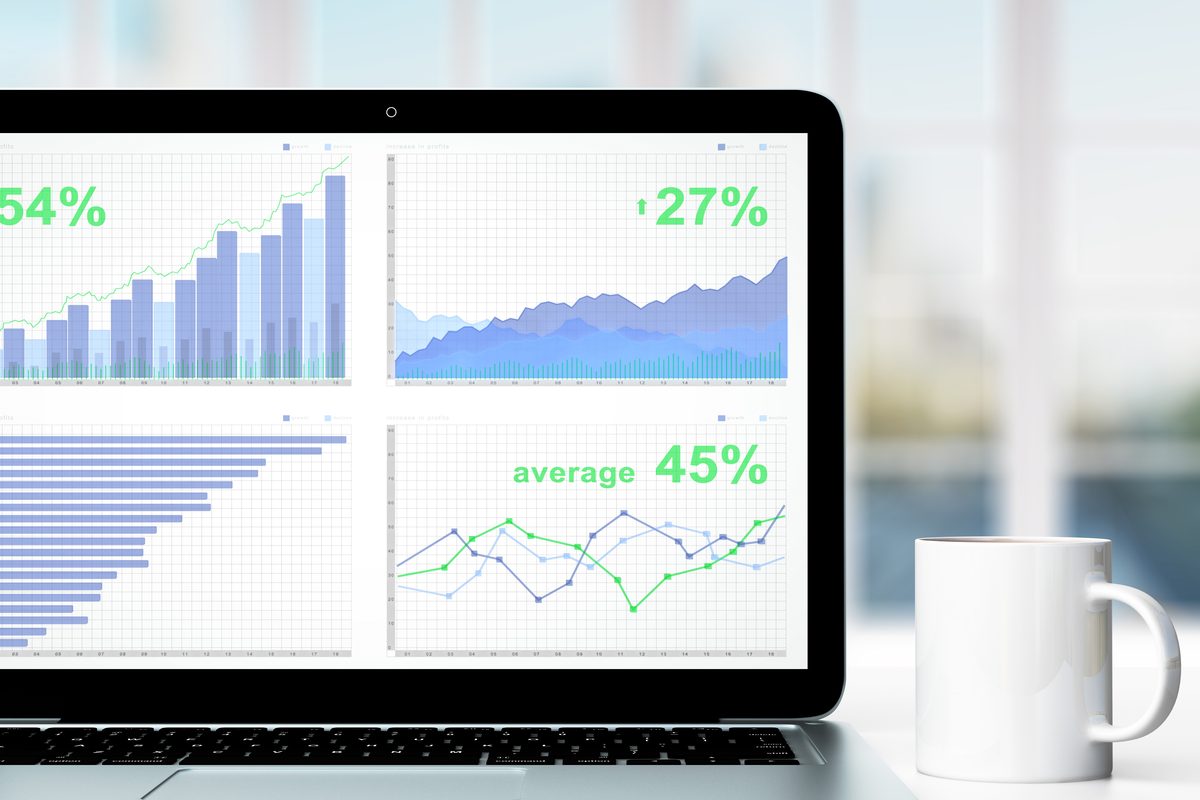
The analytics layer serves a specific purpose in the demand engineering system: not to measure vanity metrics, but to answer the question that drives every decision — which inputs are producing qualified conversations, and which are producing noise?
For technical consulting firms, the relevant measurement is not sessions, impressions, or MQL count. It is qualified conversations per month, content-attributed pipeline, and deal velocity. The analytics stack is configured to surface those signals, not to optimise for traffic.
The baseline for web traffic attribution. GA4 provides the session data, acquisition channel breakdown, and content engagement metrics that tell us which blog posts are driving return visits from qualified prospects. The specific configuration that matters for consulting firms is the conversion event setup — not form submissions as the only conversion, but content engagement depth, resource downloads, and case study reads as intermediate conversion signals.
The tag management layer that lets us deploy and modify tracking without touching the site codebase. For consulting firms running content experiments — testing different CTA placements, measuring scroll depth by post type, tracking which case studies drive contact page visits — GTM provides the flexibility to instrument those experiments without a development cycle.
Session recording and heatmap analysis. Clarity answers the questions that GA4 cannot: where exactly are visitors dropping off on the services page, which sections of a case study are actually being read, and why is the contact form converting at a low rate despite adequate traffic? For consulting firms optimising a low-volume, high-value conversion funnel, the qualitative data from session recordings is often more actionable than aggregate quantitative data.
Strategy Version Control
The most overlooked category in any marketing stack. Lloyd is version control for go-to-market strategy — it tracks positioning hypotheses, records what has been tested and what the results were, and prevents teams from repeating experiments that have already failed.
For technical consulting firms that run careful, deliberate go-to-market systems, the institutional memory that Lloyd maintains is operationally critical. Without it, strategy experiments are lost when team members change, positioning decisions are re-litigated rather than built upon, and the compounding advantage of systematic learning is squandered.
How the Stack Connects
The individual tools only produce results when they are connected into a coherent system. The research layer informs the ICP definition. The ICP definition drives the content calendar and the target account list. The outreach platform executes against the target account list. The CRM tracks what happens after the first touch. The analytics layer measures which content and which outreach is producing qualified conversations. The strategy layer records what worked.
This is the difference between a collection of tools and a demand engineering system. Most technical consulting firms have individual tools. What they are missing is the architecture that connects them — and the discipline to measure the right things once the system is running.
For a deeper understanding of how these tools operate within the broader methodology, read What is Demand Engineering. For a direct comparison of the demand engineering and demand generation approaches this stack is built around, read Demand Engineering vs. Demand Generation.
If you want to understand how this stack would apply to your specific firm, let’s talk.
Frequently Asked Questions
What tools do B2B technical consulting firms need for marketing? B2B technical consulting firms need a precision-based stack: research and intelligence tools to map small TAMs, outreach platforms configured for low-volume high-personalisation sequences, CRM infrastructure that handles long-cycle multi-stakeholder deals, fast content-optimised website infrastructure, and analytics configured to measure qualified conversations rather than traffic volume.
What is the difference between a demand generation stack and a demand engineering stack? A demand generation stack is optimised for volume — high-reach advertising, marketing automation, MQL scoring. A demand engineering stack is optimised for precision — audience intelligence tools that map small TAMs, outreach platforms that keep volume low and personalisation high, and CRM infrastructure that tracks the buying committee. The architecture reflects the fundamental difference in approach.
Do technical consulting firms need marketing automation? Most technical consulting firms do not need large-scale marketing automation. What they need is a system that maintains contact with qualified prospects across a three-to-nine month sales cycle without manual follow-up for every touchpoint — meaning CRM workflows, calendar automation, and light email nurture, not enterprise marketing automation platforms.
How much should a technical consulting firm spend on its marketing tech stack? A functional demand engineering stack costs between $500 and $2,000 per month, depending on outreach volume and CRM complexity. The largest expense is typically the CRM and outreach platform combination. The goal is not the cheapest stack — it is the one that matches the precision requirements of the firm’s buyer and sales cycle.
What CRM should a technical consulting firm use? The CRM needs to track the buying committee across multiple stakeholders, manage deals across three-to-nine month cycles, and integrate with outreach tools without requiring a dedicated sales ops team. GoHighLevel or HubSpot Starter configured for consulting workflows are the most practical options for principal-led firms.
Should technical consulting firms use LinkedIn automation tools? LinkedIn automation is appropriate at low volume with high personalisation — 20 to 40 connection requests per week, not 200. High-volume automation degrades account health and produces unqualified conversations. Automate only the initial connection and first message phases; keep all substantive dialogue manual.
Ready to build the system?
Your expertise is the product.
Your go-to-market is the multiplier.
If this resonated, let's talk about what a demand engineering system looks like for your firm.
Get in touch →